
Water is the first thing life needs.
Rivers and lakes carry drinking water, food, and the species that depend on them. Whatever moves through the water moves through everything living in it.
It looked like ordinary water.
In 2013, PFAS was found in the drinking water supplied to Kallinge, in Ronneby municipality. The source was firefighting foam that had been used for years at the adjacent airfield. By the time it was identified, residents had been drinking that water for a long time. Nothing about it looked, tasted or smelled wrong.
Researchers have since followed a cohort of mothers and children from Ronneby. Peer-reviewed studies from that cohort document how these substances passed from mothers to their children — across the placenta before birth, and through breast milk afterwards. Children were exposed before anyone knew there was anything to look for.
In December 2023, Sweden’s Supreme Court ruled that elevated levels of PFAS in blood constitute a personal injury — a decision that changed what the people of Ronneby could claim.
Nothing about this contamination was visible. That is the problem worth solving.
Sources: Supreme Court of Sweden, judgment in the PFAS case (Dec 2023) · Ronneby Mother–Child Cohort, Environmental Health Perspectives 131(1), 2023. Valys makes no claim about what any technology could have prevented in Ronneby.
By the time a laboratory confirms a problem, the water has already been used.
Drinking water is treated continuously, but it is largely checked periodically. Samples are drawn, sent away and analysed. Between one result and the next there is a gap — and in that gap, treatment decisions are made on assumptions rather than on what the water is actually doing.
Almost none of what matters is visible. Dissolved organic carbon, the precursors that form disinfection by-products, the moment an activated carbon filter stops removing what it was installed to remove — none of it changes how the water looks, tastes or smells.
Beyond UV254.
Conventional online monitoring leans on UV254 absorbance as a rough proxy for organic content. It is a single number, and it says little about how the water will actually behave in treatment.
Valys measures a proprietary optical parameter that characterises both contamination and treatability — the property that determines how a given water responds to coagulation and to activated carbon. It is measured in place, continuously, on the water as it runs.
The sensor reads the water in place
An optical sensor sits in the process and reads continuously. No sampling, no transport, no waiting for a slot in a laboratory queue.
Patented analysis turns light into meaning
The step that converts an optical signal into a parameter describing contamination and treatability rests on two decades of research.
Operators decide on live data
Coagulant dosing and activated carbon management can be adjusted against what the water is doing now, rather than against last month’s samples.
Schematic — light attenuated by dissolved matter. Illustrative of the principle, not measured data.
Who it is for
Run treatment on measurement, not assumption
Optimise coagulant dosing, manage activated carbon on real saturation, and see changes in raw water as they arrive rather than weeks later.
Detect contamination in freshwater sooner
The same early-warning capability applied to freshwater sources, so a response can begin while it still changes the outcome.
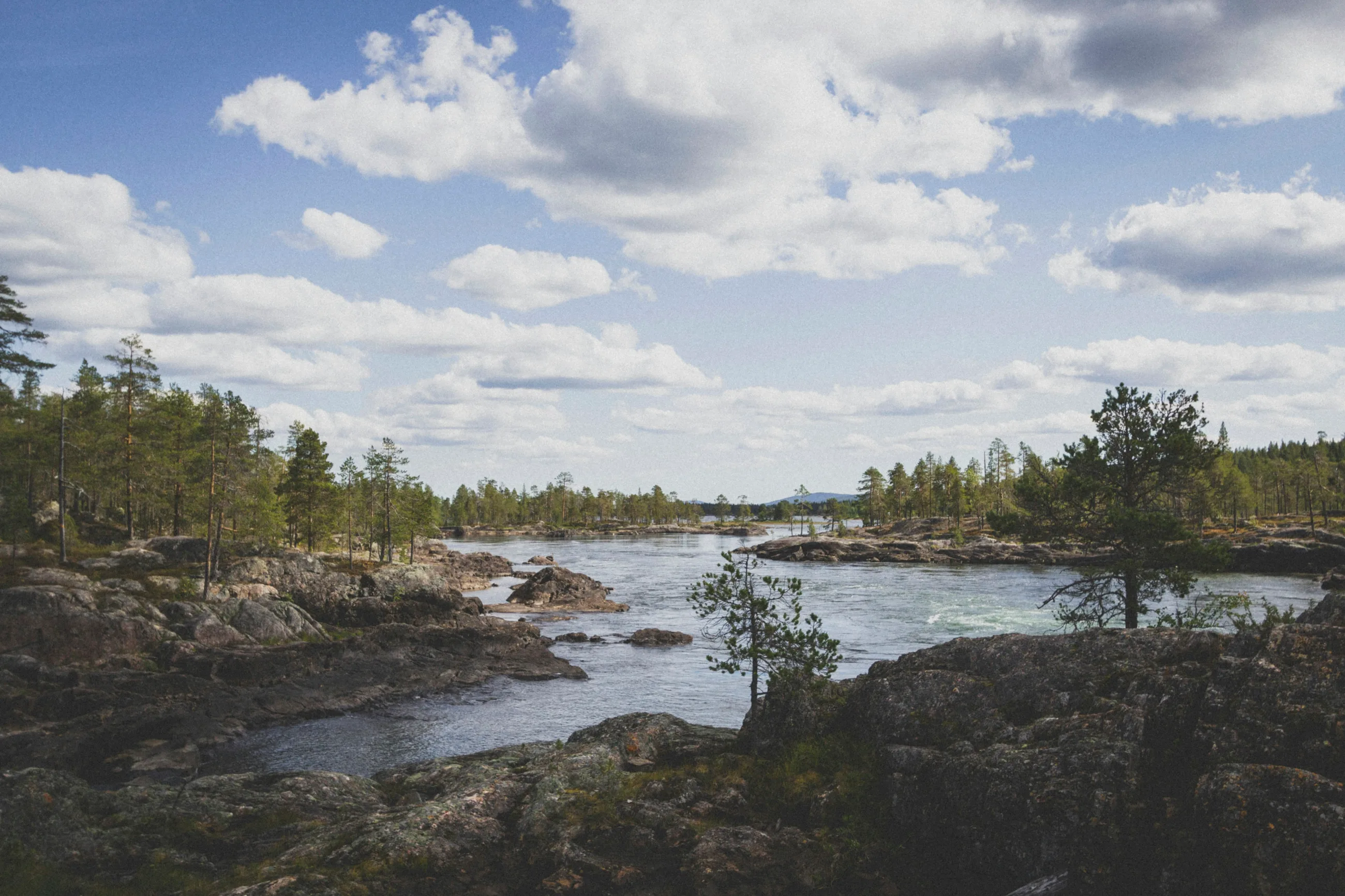
Water quality is not just a number. It is what allows life to continue.
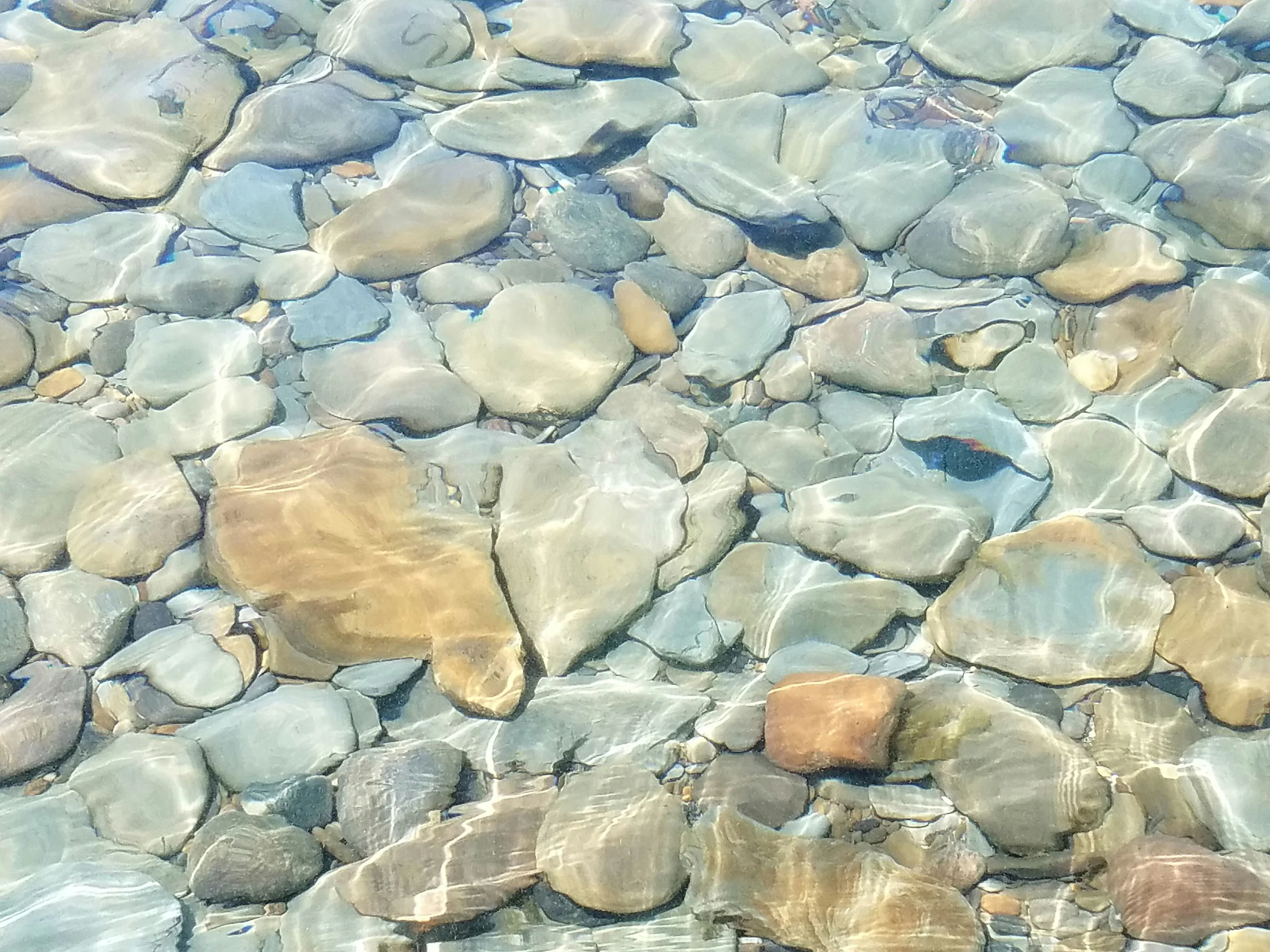

The freshwater pearl mussel can outlive the people who study it. The oldest individual recorded in Sweden was aged at 278 years, in Jokkmokk municipality.
It cannot move to better water. Its larvae must spend roughly 150 to 220 days attached to the gills of a salmon or trout before they drop into the riverbed, and the young then live buried in gravel, where they are extremely sensitive to what the water carries. The species needs nutrient-poor water to complete that cycle.
Sweden has 685 main watercourses with freshwater pearl mussels. Young mussels have been found in only 356 of them. In the rest, the adults are still there. The next generation is not.
A river can look alive and still be failing. It happens in the gravel, out of sight, years before anyone counts a difference.
The species is Critically Endangered in Europe, and an estimated 90% of all individuals were lost during the twentieth century up to the late 1980s. In Sweden it has disappeared from roughly half the watercourses it occupied in the early 1900s, and it is an official indicator in the national environmental objective for living lakes and watercourses. Sources: Sveriges miljömål, Föryngring av flodpärlmussla · Hydrobiologia, Synopsis of the European freshwater mussels: Margaritifera margaritifera (2025). Photograph: freshwater pearl mussels in the river Navarån, Västernorrland — Joel Berglund, Wikimedia Commons, CC BY-SA 3.0. Valys makes no claim about the recovery of any species.
Built on twenty years of research.
Valys is a spin-off from Chalmers University of Technology. The measurement at the centre of the company is patented, and it came out of two decades of academic work on what dissolved organic matter does to water and to the processes that treat it.
Kathleen Murphy, professor and co-founder, is the named inventor. Valys is a portfolio company of Chalmers Ventures.
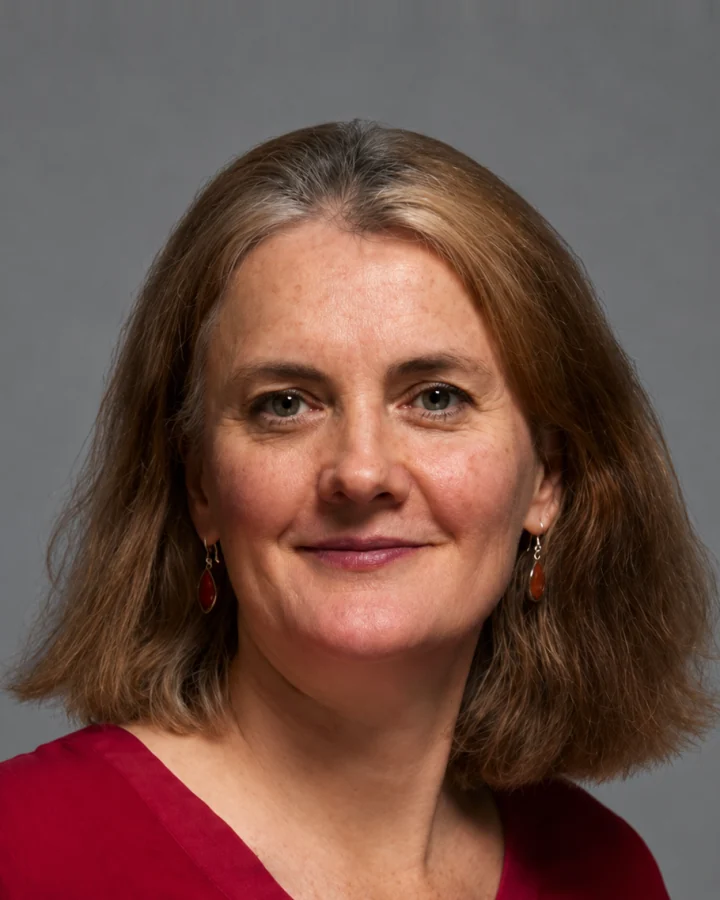
Kathleen Murphy — Inventor, Professor & Co-founder
We publish numbers when they are verified. Not before.
These are the four measures Valys holds itself to. Each will carry a figure, a method and a source once validated data exists. Until then this space stays empty on purpose.
Coagulant dosing
Reduction in chemical dose achieved by dosing against live treatability instead of a fixed setpoint.
Carbon filter lifetime
Additional service life gained by replacing activated carbon on measured saturation instead of on schedule.
Laboratory sampling
Routine samples no longer required once the parameter is monitored continuously in place.
Detection lead time
Warning gained before a change in raw water quality reaches the treated side of the plant.
Tell us what your plant is trying to see.
If you run a treatment works or monitor a freshwater source, we would rather have a technical conversation than send you a brochure.