

What the sensor measures
Valys measures quality and quantity of dissolved organic carbon and other key water quality parameters — continuously, in the process, while the water is running.
Alongside DOC, the sensor produces a proprietary parameter describing water treatability and quality. That parameter is what the system uses to inform coagulant dosing and activated carbon management, and it is what a conventional single-point reading does not give you.
Dissolved organic carbon — organic material dissolved in the water, invisible to the eye.
How readily a given water responds to treatment. Two waters with similar appearance can behave very differently.
Absorbance measured at 254 nanometres, long used across the industry as a proxy for organic content.

One number, or the whole response.
Light passing through water is changed by what the water carries. Measure that change at one wavelength and you get a single number. Measure the whole response and you get the shape of it.
Conventional online monitoring relies on UV254 — absorbance at a single wavelength, long used across the industry as a proxy for organic content. Valys reads far more of that response, and turns it into a proprietary parameter for water treatability and quality.
Schematic. Illustrative of the principle, not measured data. The curve represents absorbance across wavelength; UV254 is the value at 254 nm.
How the measurement works
Light enters the water
An optical sensor sends light through the water while it is running, in the process itself.
What the water carries changes it
Dissolved matter absorbs part of that light. What reaches the far side is no longer the light that went in.
The difference becomes a measurement
Patented analysis turns that change into a parameter describing contamination and treatability — continuously, with no sample taken.
Advantages compared to conventional methods
Real-time monitoring
Continuous, actionable insights that replace the need for time-consuming manual sampling and lab testing.
Beyond UV254
Surpasses conventional UV254 measurements by providing our proprietary, more comprehensive parameter for water treatability and quality.
Cost efficiency
Replacing manual sampling with automated monitoring lowers operational costs.
Early warning
Identifies risks like DBP formation and sudden water quality changes, enabling proactive and timely interventions.
Process optimization
Continuously optimizes coagulant dosing and GAC management for greater efficiency and resource savings.
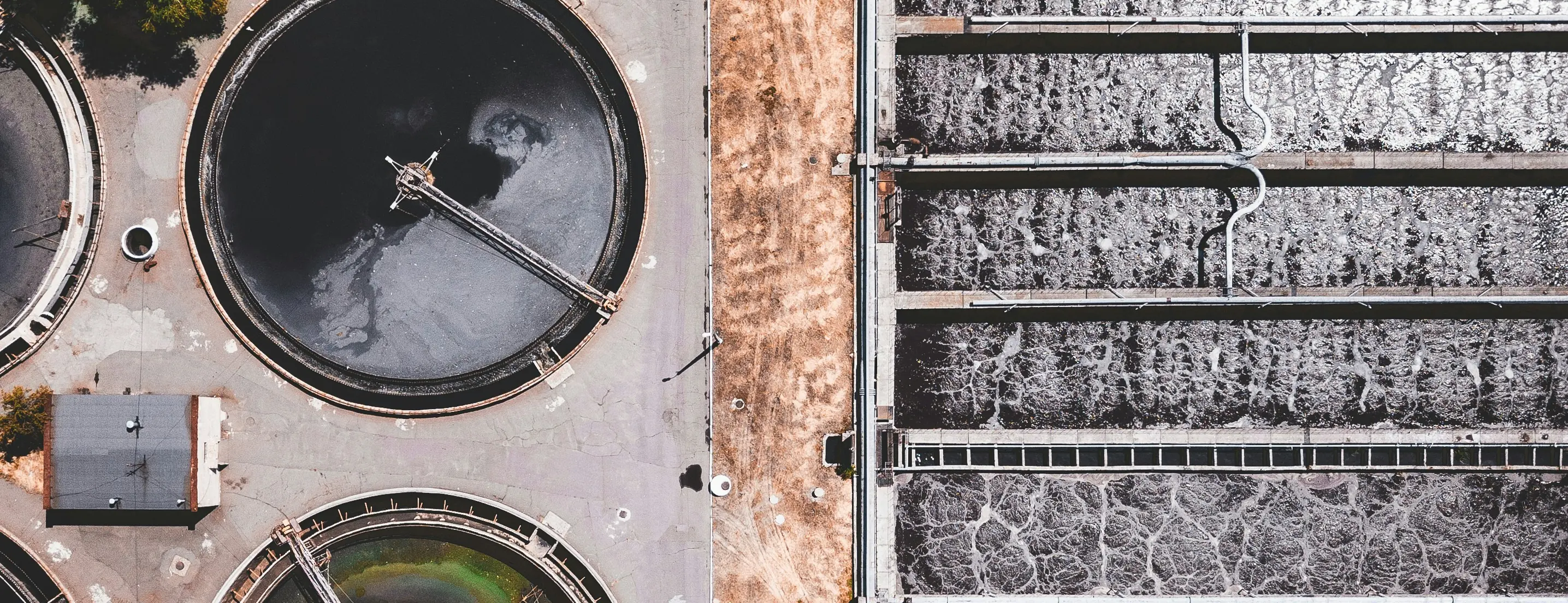
What it changes at the plant.
Activated carbon management
The sensors monitor GAC saturation and PFAS removal efficiency in real time, replacing manual sampling with automated monitoring across the filter’s lifespan.
Coagulant dosing
By predicting and optimizing coagulant dosing, the sensors help improve treatment efficiency and reduce chemical waste, while ensuring consistent water quality.
Early warning
Real-time data enables treatment plants to identify sudden changes in water quality, mitigating risks and preventing operational disruptions.
Filter performance
From PFAS removal rates to filter performance, the measurement runs throughout the filter’s lifespan rather than at the moments a sample happens to be taken.

Technical questions are the ones we like.
Tell us what your plant is trying to see, and we will tell you plainly whether we can measure it.